Every year at the Science Museum of Minnesota, we measure our impact in numbers, but we remember it in moments. A young visitor who can’t stop their curiosity. A legislator weighing a decision with better data in hand. A neighborhood partner who sees their community’s questions reflected in the science we do together.
Our mission is to turn on the science: inspire learning, inform policy, and improve lives. But what does that look like up close? Below you’ll find just a few of the stories from the past year that illustrate how the work in our building on the bluffs of the Mississippi, in classrooms across the state, and out in the field adds up to something larger.
You’ll meet learners discovering what science can mean for them. You’ll see how our researchers’ work is shaping decisions about the resources we all depend on, and you’ll hear from partners and communities whose lives and work are stronger because of what we’ve built together.
None of it happens alone. Thank you to the visitors, members, donors, educators, scientists, and partners who make this work possible. Here’s to another year of curiosity, connection, and shared purpose — creating a world where everyone sees themselves in science.

Inspire Learning
Our Backyard: Learning Without Limits
This year, Our Backyard continued to grow into one of the museum’s most beloved spaces: 70,000 square feet of outdoor, full-body science along the Mississippi River. Visitors build with natural materials, power circuits with their own bodies in Exploring Energy (powered by Xcel Energy), and spend hours redirecting a stream fed by a natural artesian spring. Its design was informed by conversations with underrepresented communities, ensuring they would feel welcome and secure.
Learn more about the exhibit’s design.


A Lifetime Collection Finds a New Home
Longtime biology lab volunteer Ron Huber and his wife Cathy, whose shared love of butterflies brought them together, gave the museum more than 10,000 insect specimens collected over 73 years. Ron is a tiger beetle expert who has named seven new species and edited the journal Cicindela since 1969. Their gift greatly expands an entomology collection that began as just two cabinets and will support scientific discovery for generations.
Read more about Ron and Cathy’s story.
Where Big Dreams Begin
As a young child in the Twin Cities, NASA astronaut Dr. Anil Menon watched a space documentary in our Omnitheater, saw an astronaut on a spacewalk, and realized for the first time that space could be a career. That moment stayed with him through medical school and a career as a flight surgeon for NASA and SpaceX. This July, he launched on his first mission to the International Space Station, an eight-month stay doing technology and medical research, and still credits the Science Museum with planting the seed.

Inform Policy

Uncovering the Source of Algal Blooms in the Boundary Waters
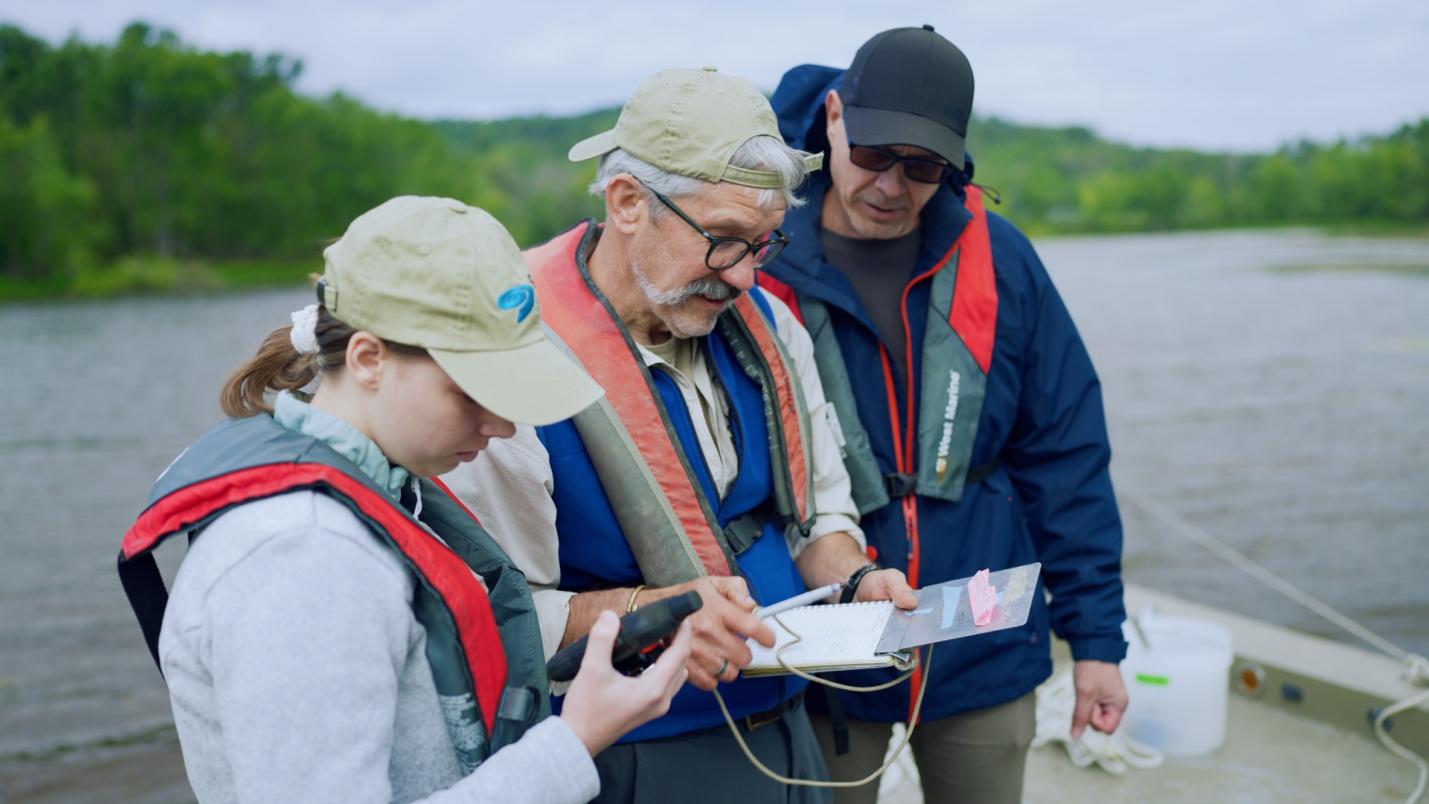
As harmful algal blooms began appearing in some of Minnesota’s most pristine wilderness lakes, scientists at our St. Croix Watershed Research Station hauled monitoring equipment by canoe and sled into the Boundary Waters to find out why. Their data showed the blooms were a byproduct of phosphorus released inside shallow lakes as a warming climate disrupts how they mix. With renewed support from the Minnesota Environment and Natural Resources Trust Fund, the team has begun a second phase to help guide how these lakes are managed and protected.
Read more about the Wilderness Lakes project.
Sharing Minnesota’s Greatest Environmental Investment
Since 1991, Minnesota’s Environment and Natural Resources Trust Fund, created by voters through a 1988 constitutional amendment, has supported thousands of projects that protect the state’s air, water, land, and wildlife. This year, we brought that legacy to life with a new exhibit and an interactive online map featuring more than 100 stories, including mini-documentaries, videos, and activities about the people and places behind the work. It helps Minnesotans see how public investment in science and conservation pays off across every corner of the state, for generations.

Improve Lives

Building Pathways to STEM Careers
At the Kitty Andersen Youth Science Center, young people gain real-world skills that open the door to careers in high-demand STEM fields. Working alongside partners like Trane Technologies, participants train in data analytics and decarbonization, areas with living-wage jobs that don’t require a four-year degree. They earn industry-recognized certifications, explore careers through mentor talks and summer field experiences, and build direct connections with professionals. The partnership, which also brings the museum’s STEM Justice training to Trane’s workforce nationwide, was honored with Twin Cities Business’s 2025 Outstanding Collaboration Award.
Read more about the partnership.
Building More Inclusive Institutions
Through our IDEAL Center, we help professionals develop the skills, strategies, and resolve to make their organizations more equitable and welcoming, so more people can see themselves in science. This year we deepened that commitment by becoming the new home of the Cultural Competence Learning Institute, a nationally respected equity program for museum leaders. Its curriculum, research, and digital learning tools now join IDEAL’s work, extending our reach to institutions across the country.
Read the announcement about the acquisition.


Celebrating Diversity in Science and Nature
We believe science belongs to everyone, and that showing up for our LGBTQ+ communities is part of creating a place where everyone sees themselves in science. This year, we celebrated Pride by hosting Club Science: Pride, joining the Twin Cities Pride Festival, and sharing stories from our collections, including our Biology Collections Manager’s look at the remarkable diversity of sex across the animal kingdom. Together, these efforts reflect our commitment to a welcoming museum where every visitor and community belongs.
Read Dakota’s blog post.