Dakota Rowsey is the Biology Collections Manager at the Science Museum of Minnesota. He loves sharing animal facts unprompted. Did you know that badgers sometimes hunt for rodents alongside, and even with, coyotes and foxes? People can learn a lot from their exemplary collaboration!
When we talk about the remarkable diversity of human gender expression — the expansive spectrum of identities and experiences that make our species so rich — we’re talking about something that, as far as we know, is uniquely human. Gender is shaped by individual identity, culture, and social context, not simply by biology. Our non-human relatives almost certainly don’t experience gender in the ways we do.
But that doesn’t mean that nature defaults into a simple male/female binary. Biological sex is strikingly diverse across the animal kingdom. Defined by the reproductive role an organism can play, sex is shaped by a combination of chromosomes, hormones, anatomy, and for some species, even temperature. Sex isn’t always determined at birth and isn’t always fixed. Even in humans, there are different chromosome combinations than XX (typically female) and XY (typically male).
One way diversity in sex presentation shows up in nature is sequential hermaphroditism. In non-human animals, this is defined as organisms that start life as one sex but change sex at a certain point in their life. Sequential hermaphroditism is found in a variety of different animal groups, including fishes, mollusks, crustaceans, and more. Each of these groups has evolved sequential hermaphroditism separately, and in some cases multiple times within each group.

There are two main types of sequential hermaphroditism: protandry and protogyny. Protandy means starting life as a male and transitioning to female, and protogyny is the opposite. In both cases, changes in hormone expression cause the sex organs of the animal to alter. These changes are typically caused by a trigger in the animal’s development or social context. In many animals, including humans, sex organs develop in response to hormone expression during an embryonic stage. In sequentially hermaphroditic species it can happen after the animal has reached maturity. Arguably the best understood example of protandry is in Anemonefish (Amphiprion spp.), which live in social groups in anemones. In these groups, the largest individual is the reproductive female and the second largest is usually the sole reproductive male. In the absence of the female, the reproductive male transitions to female and the next largest male becomes reproductively active (Hattori 2000, Austral Ecology).
In protogynous systems, the social dynamic is often reversed. The largest individual is male and reproduces with the smaller individuals in the group who are generally all female. However, this is not always the case: In blue cod (Parapercis colias), individuals mature as either male or female, but some females change their sex to male after maturity, though the mechanism behind this is still poorly known (Brandt et al. 2017, Aquatic Biology).
In addition to sex change after maturity, sometimes sex is determined not when the animal is born, but as the animal ages. For instance, in Midas cichlids (Amphilophus citrinellus), the animal’s social interactions influence their sex as they mature through dominance hierarchies, with larger, male fish suppressing the growth of smaller fish, who mature as females (Oldfield 2005, Fish and Fisheries).
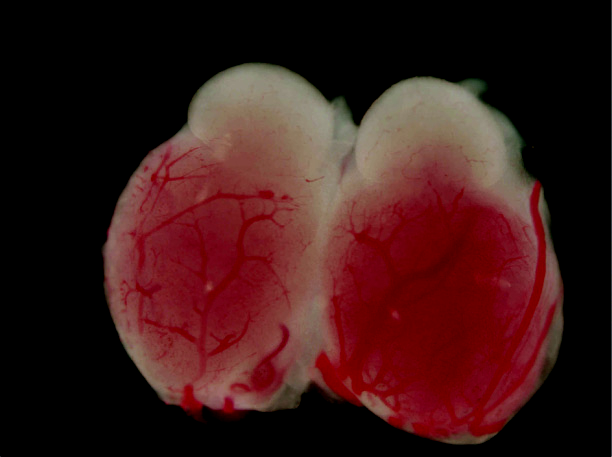
Sometimes sex expression lies somewhere between male and female. In at least eight different species of mole, females exhibit intersex traits. Male moles exhibit testes, but females have a structure called an “ovotestis.” The ovary is reproductively viable, but is also associated with testicular tissue that does not produce fertile sperm but contains other cells associated with testes, including organs that produce male hormones. These male hormones cause female moles to develop external genitalia that look more like that of males, as well as increased muscle growth and aggressive behavior (Real et al. 2020, Science).


These examples are just a small sampling of the diversity of sexual and reproductive systems that naturally occur in the world around us. To learn more, check out some of these books:
- Evolution’s Rainbow: Diversity, Gender, and Sexuality in Nature and People by Joan Roughgarden
- Forest Euphoria: The Abounding Queerness of Nature by Patricia Ononiwu Kaishian
- How Far the Light Reaches: A Life in Ten Sea Creatures by Sabrina Imbler
Happy reading, and happy Pride!