Congressionally directed spending secured by Senators Amy Klobuchar and Tina Smith will fund five new Regional STEM Educator Resource Centers across greater Minnesota
St. Paul, MN — The Science Museum of Minnesota has received $2.5 million in federal funding to establish a statewide network of Regional STEM Educator Resource Centers, extending the reach of the Museum’s STEM Lending Library and educator support programs to rural communities across Minnesota.
The funding, secured by Senators Amy Klobuchar and Tina Smith through congressionally directed spending in the FY2026 federal budget, will allow the Museum to partner with regional organizations to open five new Resource Centers in greater Minnesota, bringing the Museum’s total network to six sites statewide. The new centers are expected to put STEM teaching materials, equipment, and professional development within easy reach of more than 87 additional rural school districts, serving over 108,000 K-12 students who currently have limited access to these resources.
“We are so grateful to Senators Klobuchar and Smith for securing $2.5 million for the establishment of a Regional Educator Resource Center network across the state of Minnesota,” said Alison Rempel Brown, Science Museum of Minnesota President and CEO. “This funding will allow us to establish partnerships in rural areas of the state that cannot benefit from the tremendous resources that are available to K-12 science and math teachers and students in the Twin Cities area. This network will ensure that students in remote and underserved areas of the state are on a more even footing when competing for college admission and careers in STEM fields.”
“Science and innovation have always been at the heart of Minnesota. For over 100 years, the Science Museum of Minnesota has made science both accessible and enjoyable to kids, inspiring generations of students to ask questions, seek out answers, and dream big,” said Senator Amy Klobuchar. “Every student deserves the opportunity to explore science and discover their potential. These new Resource Centers will bring hands-on STEM resources and training closer to students and teachers in rural Minnesota, opening doors to new learning opportunities and helping prepare the next generation of innovators.”
“The Science Museum of Minnesota is a world-class educational resource now serving students all across Minnesota,” said Senator Tina Smith. “The new Regional STEM Educator Resource Centers will bring rare fossils and specimens from the museum in St. Paul to classrooms in small towns and rural communities who otherwise might not be able to make the trip to experience everything the museum has to offer. The museum staff worked tirelessly alongside Senator Klobuchar and me to secure this funding, and I’m excited to hear from the students who get the opportunity to learn because of this project.”
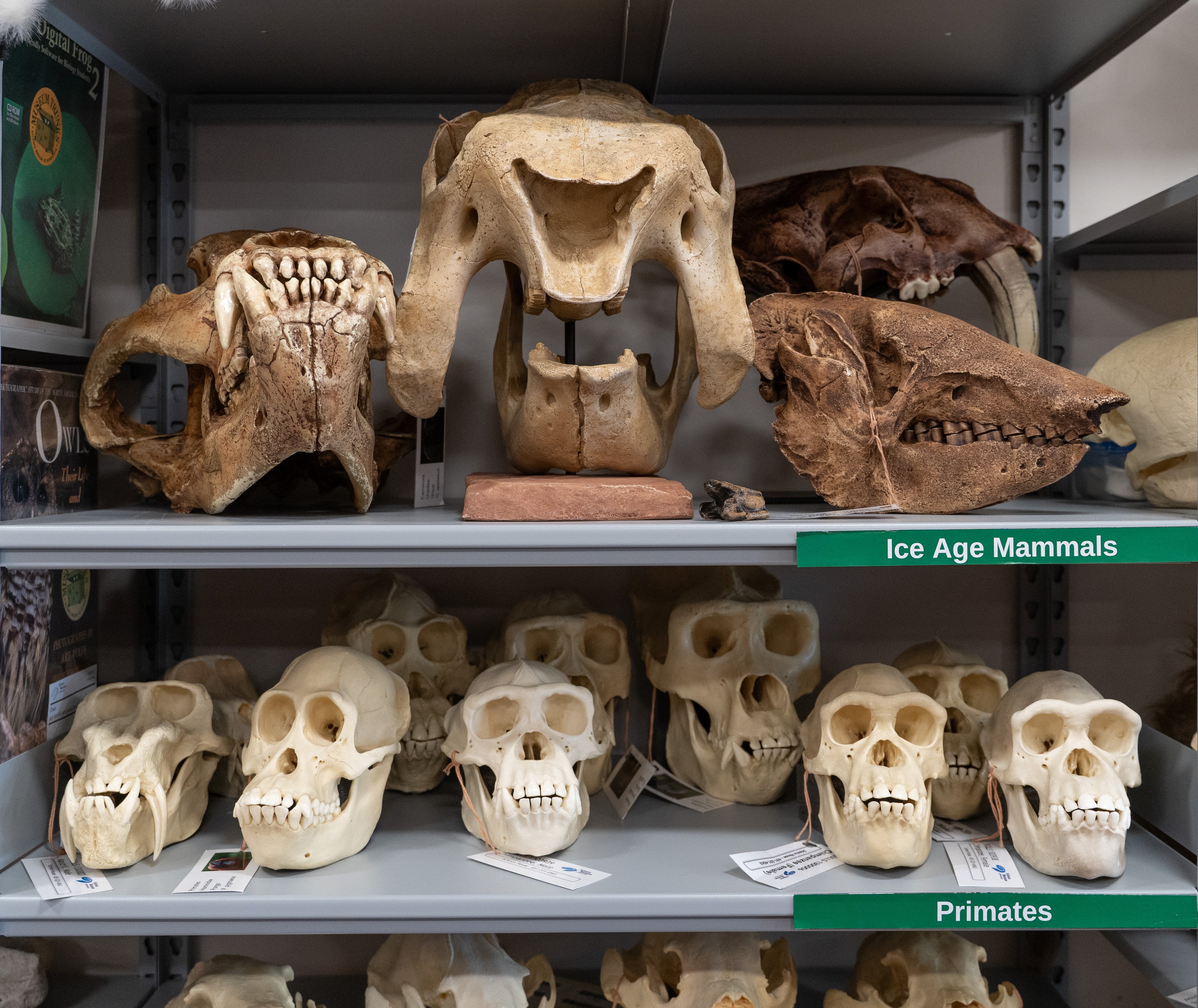
The Science Museum of Minnesota’s existing Educator Resource Center in Saint Paul has served metro-area teachers for years, offering consultations, professional development and a lending library of STEM materials valued at more than $500,000 — including stream tables, curriculum kits, skulls and geological and fossil specimens. Because educators typically visit the library outside school hours, its reach has been effectively limited to about a one-hour drive from the Museum. The new regional centers will remove that barrier for educators across the state.

The initial phase of this work is already underway in partnership with Headwaters Science Center in Bemidji, supported by a recommended $1,091,000 investment from Minnesota’s Environment and Natural Resources Trust Fund through the Legislative-Citizen Commission on Minnesota Resources. The new federal funding will build on that momentum, supporting additional regional partners, including the Headwaters Science Center. Specific sites and collaborations are being finalized for the remaining sites.
At the core of the initiative is a peer-observation model, in which Science Museum educators lead hands-on STEM demonstrations for local teachers, then observe as those teachers lead their own lessons — building professional relationships and sharing best practices across regions. Each Resource Center’s collection will be tailored to local community needs, with all six sites able to share materials through an inter-library loan system.
“Science Museum educators bring decades of experience on the road when we visit schools all across the region,” said Farzad Sadjadi, Associate Vice President for Lifelong Learning. “However, those lessons are often limited to a single assembly or afternoon in one classroom. Through this new network, we are able to expand and significantly deepen not only our relationships with educators, but the tens of thousands of children who will benefit from hands-on STEM learning for years to come.”
Research shows that students are far more likely to pursue STEM careers they’ve seen represented in their own communities, yet rural areas often have fewer local STEM employers and less industry outreach to schools. By pairing hands-on resources with local advisors who can connect STEM content to the regional workforce, the Resource Center network aims to close both the achievement and aspiration gaps that separate rural and nonrural students in STEM fields.
“Our mission is ‘Science You Can Touch,’” said Lee Furuseth, Executive Director, Headwaters Science Center. “We see science as something you do, not just a subject you study, and we want every student to have the chance to do it with their own hands. This partnership means teachers across northern Minnesota can bring that hands-on experience into their classrooms.”
The Science Museum of Minnesota has worked with educators in all 87 Minnesota counties and reached more than one million students statewide over the past decade through field trips and outreach programs. This new network builds on more than a century of the Museum’s work translating science into hands-on learning, with the goal of ensuring that every Minnesota educator — regardless of zip code — has access to the tools they need to bring STEM to life in their classroom.