Stephanie Vang is an intern in the marketing and communications department. During the school year when she worked with children they would always ask if they could feed the squirrels. She always said no…but after a while she started to really think about why not?
Throughout the year I would always see squirrels at my school campus or the Science Museum. I realized that they are not afraid of humans necessarily and are always on the lookout for food. While I always stood on the stance of not feeding wildlife I never really understood the more detailed reasons on why. So after racking my brain I finally decided to do more research and ask people who did!
There are about 120 trash cans inside and outside at the Museum to encourage visitors and workers to clean up after themselves to maintain a clean, safe, and healthy environment. However, the trash cans have then become a spot for squirrels in the area to dive into while looking for food. Seeing this in action can be surprising and make you want to feed them yourself. While it is amazing to take care of our wildlife, feeding them often will do more harm than good. Some cities in Minnesota such as Saint Paul have implemented rules of feeding the local wildlife.
Recently, the Microscope met up with Dakota Roswey, Biology Collections Manager, on this topic. This interview led to important things to note when feeding squirrels.

In Minnesota, there are five types of squirrels: tree squirrels (Gray, Fox, and Red) and flying squirrels (Northern and Southern). Each of these species are very resourceful in finding their own food, and do not need the support of humans feeding them. This is due to the fact that they will search for habitable areas that have ready food sources.
Squirrels are dietary generalists, meaning they will adjust their diet to the area that they live in to ensure survival. This is why in cities and well populated areas it is common to see squirrels leaping into garbage cans for food. They have adapted to the trash being a sustained source of nutrients.
So, it is important to understand that feeding squirrels carries a risk of interfering with their hunting and gathering instincts. There is a risk that they could deem humans as a reliable food source and will move to be closer. With this reliance it could lower their survival instincts. Local areas can also be affected with their garbage cans and wires being chewed through for food and housing.
If someone decides to feed squirrels or other wildlife it is crucial to consider the long term effects rather than just short term. Giving them access to food could potentially have them stealing food from others such as squirrels stealing from bird feeders. As the person feeding them, you will have to come up with multiple ways to prevent them from doing so.
This is why educating yourself about animal feeding habits is important. While squirrels can eat anything, that does not mean they should be fed everything.
However if a dead squirrel or wild animal were to be found, you can do something about it! The Science Museum of Minnesota and the Bell Museum are partnering together for the Salvage Wildlife Project. Collecting the remains and using them for research is an opportunity to learn about that species and their history in Minnesota. Currently they are not taking in squirrels but are welcoming other animals that are found.

To learn more visit, “Salvage Wildlife to Inform Environmental Health, Ecology, Education” as it provides more information about their mission, and procedures when contacting them. It is important to inform both the Science Museum of Minnesota and Bell Museum as they must prepare for the incoming animal remain(s).
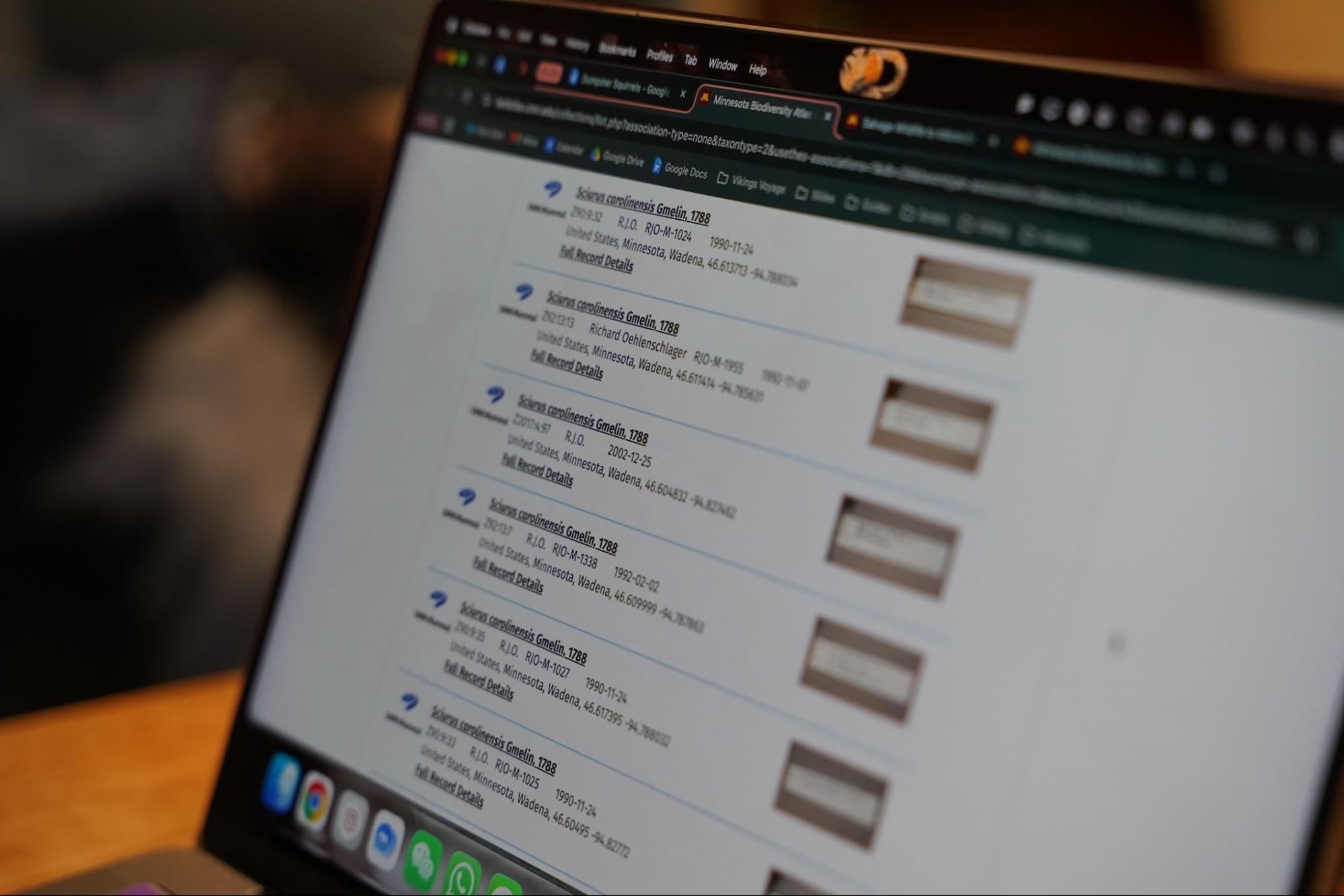
If you are curious about what kind of squirrels the Science Museum of Minnesota has in their collection please go to the Minnesota Biodiversity Atlas to find out!