Like many of us after a particularly tear-jerky “Ted Lasso” episode, walleye are a sensitive fish. Well, research has yet to show if their physical sensitivities similarly translate to their emotions, so the comparison “Like so many transplants experiencing a polar vortex for the first time, walleye are a sensitive fish” may be more apt.
Walleye require their water to be cooled – not still nor sparkling. Similar to Batman, the fish possess a specialized reflective eye layer that enhances vision in dark or murky water. Walleye thrive in turbid lakes, rivers, and reservoirs with high oxygen levels and water temperatures ideally between 55 and 75 degrees Fahrenheit. And like most toddlers, they prefer structure: rocky points, tree roots, and aquatic plants that offer cover and ambush points.
It’s not just a singular condition that leads the freshwater fish to “dirty, flirty, and thriving” status, but rather a set of indicators that all contribute. This led scientists at the museum’s St. Croix Watershed Research Station to posit the question: Why do some populations of walleye respond differently to similar environmental changes? If cool, dark areas are what they like, why do some fare better in the sun than others?
A Local Legend
With three roadside attractions (Willy the Walleye, Wally the Walleye, and the less alliteratively named Leapin’ Walleye) dedicated to the iconic state symbol, it’s no secret that Minnesotans stand by the walleye. While it may not be the biggest lunker nor the most abundant, it’s a popular perch for its storied history as a form of sustenance and sportfishing appeal.
“We care a lot about walleye, it’s our state fish,” Erin Mittag, postdoctoral fellow at the Station said. “They are unique in their cultural and economic significance.”
Walleye are a major economic engine for Minnesota and a key source of sustenance for Indigenous communities. The fish remain a popular food source, but have more recently transitioned to a sportfishing target for anglers. With its formal designation as the state fish in 1965, it’s safe to say Minnesotans have an eye for walleye.
More recently, however, changes in our lakes have required that eye to be more watchful. Many of Minnesota’s lakes are beginning to feel the heat, as well as decades of harmful pollution and the introduction of non-native species. Monitoring efforts by the Minnesota Department of Natural Resources and other organizations have shown that our lakes are already contending with climate change and a growing list of invasive species, including the spiny water flea and zebra mussel. Excess nutrients, like phosphorus and nitrogen from crop and lawn fertilizers, can also lead to thick, sometimes toxic algae growth. These stressors can alter lake oxygen, temperature, clarity, and food web dynamics — and potentially imperil walleye.

Core Question
With these threats looming, scientists at the Station are looking to understand why some walleye populations have proven more resilient to these changes than others. To do this, they’ve begun analyzing lake changes over time through a process called sediment coring.

“We go to the deepest region of a lake , and we push a tube into the mud and pull out a sediment core,” Mittag said. “Mud gradually accumulates in the bottom of lakes over time. Because that mud captures evidence of what the lake and the landscape were like when it was deposited, we can use sediment cores to understand what that lake used to be like and how it’s changed.”
These sediment cores contain the remains of hundreds of thousands, or even millions, of tiny organisms that lived in the lake in the past, but they don’t provide the full picture that fish bones would. Alas, finding these are rare, so scientists have to use other pieces of evidence to understand what walleye populations were like in the past.
“We need to use contemporary information to identify what those signatures of a thriving fish population are. Looking across lakes, we’re building relationships that are predictive, that help us predict how many walleye there are,” Mittag said. Using lake clarity, temperature, and the zooplankton population, the scientists are looking to understand how these three indicators help to predict walleye. Once they have an accurate model, then those three indicators can be reconstructed in the sediment record to estimate previous walleye populations. To do this, the team selected 16 lakes to study, representing a mix of clear, cloudy, warm, and cool to capture differences in water temperature and clarity.
“We want to have variation so that the models are as useful as possible, but these lakes are also some of our most important walleye fisheries. We work closely with local natural resource managers, including the Minnesota Department of Natural Resources regional offices, Red Lake Nation Department of Natural Resources, Mille Lacs Band of Ojibwe Department of Natural Resources and the Leech Lake Division of Resource Management, to identify and sample lakes that are of particular concern to those communities,” Mittag said.
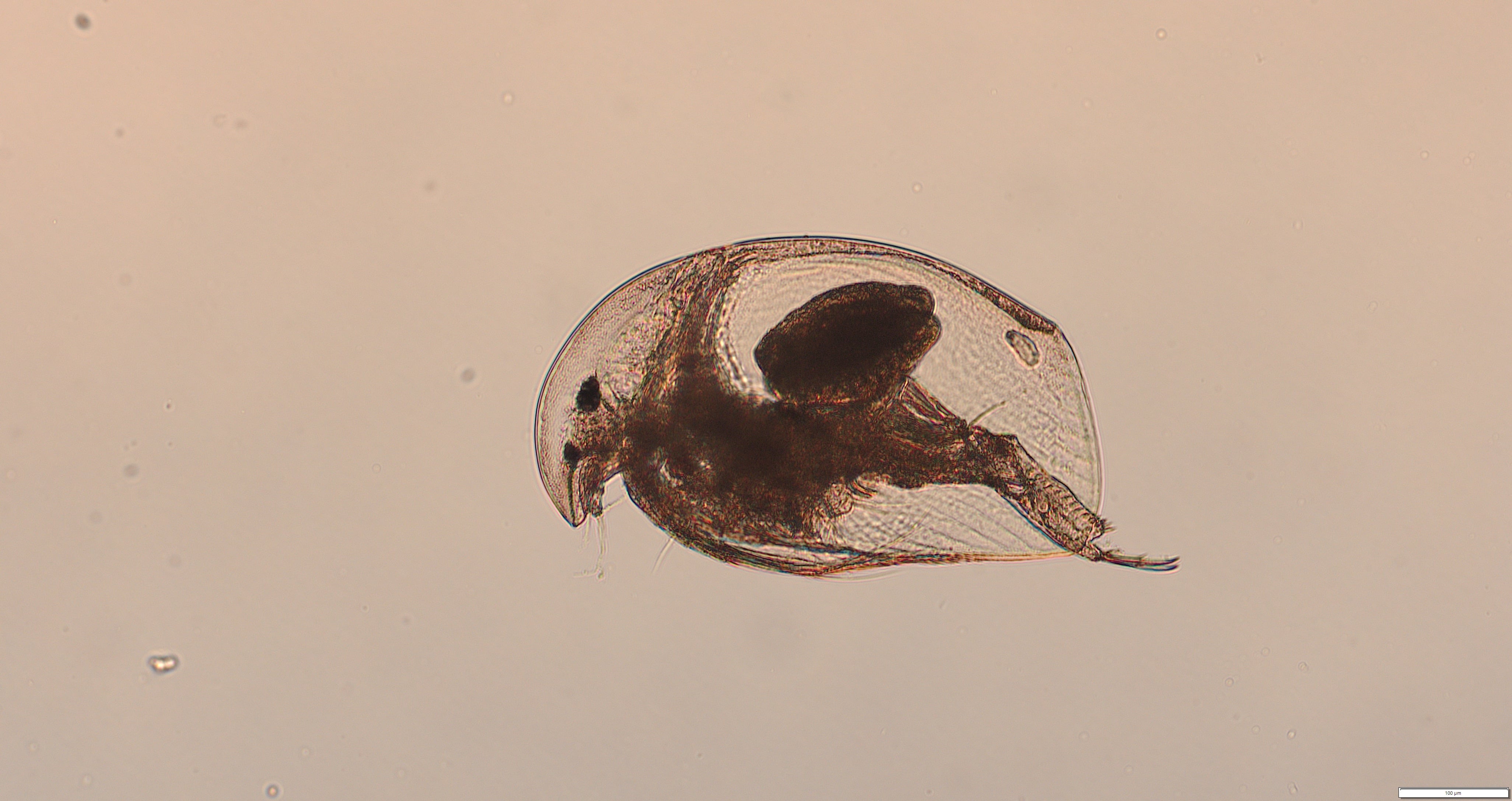
Once the team collected cores from all of the selected lakes, they worked with partners at the University of Minnesota to begin building the model. The next step involves counting the microscopic zooplankton, as well as documenting the organism’s size distribution to better understand how they connect to walleye through the food web of a lake.
This is where the team is now: meticulously counting, measuring, and analyzing tiny little organisms through a microscope lens to better understand the prized perch that swims our waters. By June 2027, they hope to have answers to the question that started it all.

Project partners: University of Minnesota, MN Dept of Natural Resources, Red Lake Nation Department of Natural Resources, and Leech Lake Division of Resource Management
Funding: Environment and Natural Resources Trust Fund