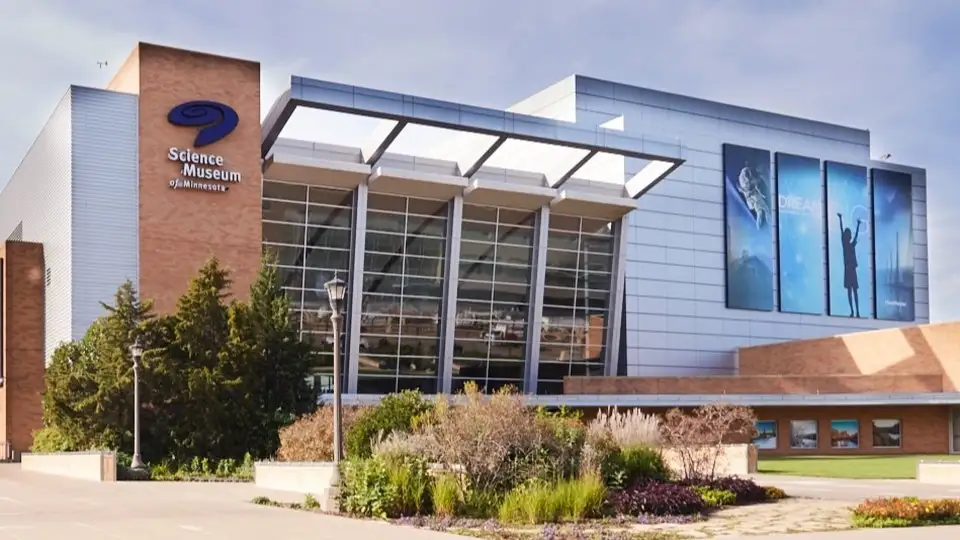
Months-long, data-driven process positions the nearly 120-year-old institution for its next chapter
St. Paul, MN — The Science Museum of Minnesota, which celebrates its 120th year in 2027, recently completed a comprehensive review of its operations and adopted a balanced budget for fiscal year 2027. A team of museum leaders and trustees identified a $4.64 million gap in the 2027 operating budget and recommended addressing that difference through a combination of cost reductions and organizational changes. But museum leaders caution that cuts alone cannot secure the institution’s long-term future.
Like cultural institutions nationwide, especially science centers, the Science Museum has faced sustained pressure in recent years. Attendance has not returned to pre-pandemic levels, and revenue from the museum’s touring exhibitions, historically a significant source of income, has declined as other museums face the same constraints. Federal and state funding for the museum’s science and education work was cut by nearly 80%. Meanwhile, the costs of operating and maintaining the museum’s large riverfront building continue to rise.
To sustain the museum for the next generation, adjustments for fiscal year 2027 (which started July 1, 2026) include:
- Labor savings of $2.14 million in fiscal year 2027 through the elimination/alteration of 22 positions while keeping another 10 unfilled. Separated staff will be provided with comprehensive severance support and resources.
- $1.78 million in other non-program-related reductions, including cuts to advertising
- Sunsetting the museum’s touring exhibitions program and restructuring its exhibit design and fabrication business
- Revenue of approximately $722,000 from new experiences and fundraising
“These are hard choices, and they affect dedicated individuals who have enabled our institution to deliver inspiring STEM learning all over the world,” said Alison Brown, President and CEO, Science Museum of Minnesota. “Balancing our budget puts us on solid footing to invest in what Minnesotans value most about the Science Museum and what comes next.”
“This was a disciplined, evidence-based process, and it asked a lot of everyone involved,” said Ken Smith, Chair, Science Museum of Minnesota Board of Trustees. “We looked closely at every facet of the museum and made tough choices with the long term in mind, not just to balance one year’s budget. The Science Museum can’t cut its way to success. Its future now depends on investment and the support of Minnesotans who care about it.”
Despite these challenges, the museum’s core experience remains strong. In 2026 visitor research, the Science Museum scored above national benchmarks for visitor-serving organizations on educational experience, admission value, and overall satisfaction. Compared to other U.S. cultural organizations, the Science Museum continues to see accelerated growth in how comfortable visitors feel, with the largest gains among adults ages 18-34 and BIPOC and Middle East and North Africa (MENA) visitors. The challenge, leaders say, is the cost of delivering that experience in a building and business model designed last century.
This year’s review follows a 2025 restructuring that reduced the museum’s annual operating budget from $38 million to $31 million. Balancing FY27 does not resolve the museum’s longer-term needs, including debt repayment and significant capital expenses for the 30-year-old building, along with the need to rebuild contributed revenue as public funding declines. Support from individuals, foundations and civic partners over the coming year will shape what the museum can become. As the museum approaches its 120th anniversary on Jan. 25, 2027, it will soon announce new ways for Minnesotans to help shape its next chapter.