Recently, the Microscope had a conversation with Adam Heathcote, Director, Department of Water and Climate Change, about the work and impact of the museum’s St. Croix Watershed Research Station. This post contains excerpts from that chat.

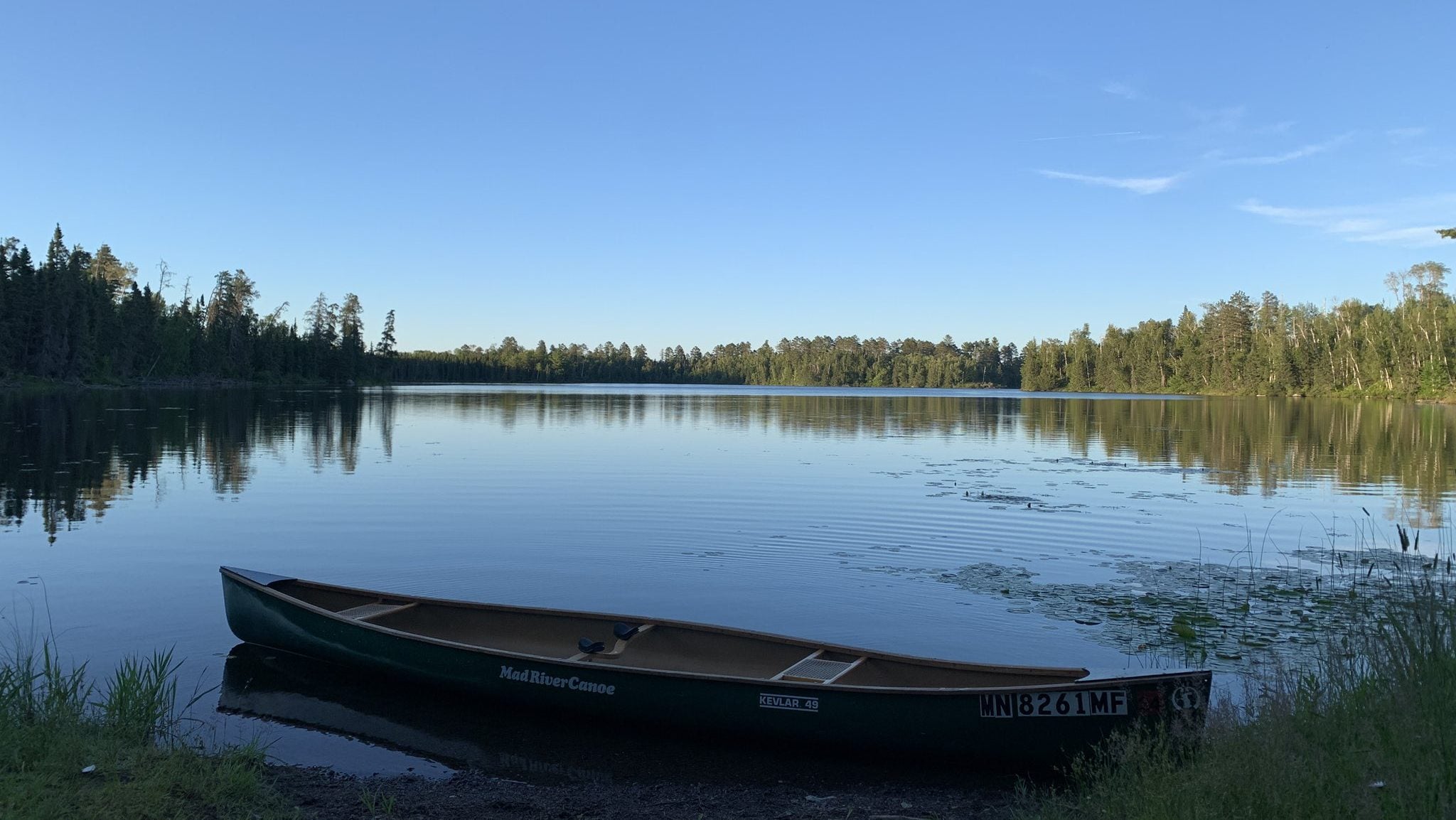
Beneath the surface of Minnesota’s 10,000+ lakes lies an archive more detailed than any history book: layers of sediment that have accumulated year after year, decade after decade, for millenia. Each layer captures a moment in time — the pollen that drifted down, the algae that bloomed, the pollutants that washed in. Together, they tell the complete story of how our waters have changed.
At the St. Croix Watershed Research Station, scientists are reading these stories. What they discover doesn’t just satisfy academic curiosity — it determines how millions of dollars get spent, how best to restore polluted lakes, and what “healthy” actually means when we’re trying to bring damaged waters back to life.
The Station has become an internationally recognized center for paleolimnology, the study of the history of inland waters. When scientists extract a core of sediment from a lake bottom, they’re essentially pulling up a timeline. By analyzing these cores, researchers can understand how aquatic ecosystems have changed over decades or even millennia, providing the critical context needed for environmental restoration and protection efforts.
This isn’t esoteric science. This is the foundation of how Minnesota protects its waters. The Station’s research helped establish the nutrient criteria now embedded in state law — the benchmarks that determine whether a lake is healthy and guide tens of millions of dollars in restoration investments. Instead of guessing what a lake should look like, scientists can look back at what it did look like before agricultural runoff or development changed it. This ensures public funds are targeted effectively and restoration goals are based on scientific evidence of what lakes can realistically achieve, not wishful thinking.
When state agencies, tribal governments, and watershed districts face complex regulatory questions about water quality, they turn to the St. Croix Watershed Research Station. The team has contributed to dozens of Total Maximum Daily Load (TMDL) studies across Minnesota, including challenging multi-jurisdictional waters like Lake of the Woods and Red Lake.
TMDL studies are federally mandated plans required under the Clean Water Act. They calculate the maximum amount of a pollutant a lake or river can handle while still meeting water quality standards, essentially serving as a restoration roadmap for impaired waters. These aren’t simple puzzles. They require understanding how pollutants move through watersheds, how ecosystems respond, and what realistic targets look like. The Station’s deep expertise in lake history makes it uniquely qualified to answer these questions.
Over the years, the team has formulated a sustainable model to ensure long-term impact. While many field stations have struggled or closed due to funding cuts, the Station has diversified its operations through competitive grant funding, specialized contract work, and strategic investments in equipment — creating a stable foundation for continued research excellence.
The Station’s location within the St. Croix National Scenic Riverway has been instrumental in building both local pride and global connections. Over 36 years, people in the St. Croix Valley have delighted in having this research facility in their community. A partnership spanning more than two decades with the National Park Service, combined with proximity to a major visitor center, helps engage the public in water quality science in ways that feel tangible and meaningful.
The Station’s influence extends far beyond Minnesota’s borders. Research conducted here on triclosan contamination in the Great Lakes — including finding this antibacterial chemical throughout Lake Superior — contributed to nationwide bans on triclosan in non-pharmaceutical products. It marked a turning point in the fight against antibacterial overuse, and it started with sediment cores pulled from the bottom of the world’s largest freshwater lake.
St. Croix also boasts unique capabilities that serve researchers worldwide. It houses rare, specialized equipment — including alpha and gamma spectrometers — that many labs do not have the expertise or ability to maintain. These instruments are crucial for precisely dating the individual layers of a sediment core and have helped make the Station one of the most prolific paleolimnology labs in the world, conducting contract work that connects researchers to networks across the globe.
Perhaps the Station’s most enduring impact is human. The facility is developing the water quality professionals Minnesota and the nation need through expanded training programs that include post-doctoral fellows preparing for research and academic careers, the Station’s unique Environmental Research Fellow program that provides cross-departmental field and lab skills in a post-bachelor’s program, and summer internships giving undergraduate students intensive, paid experience that launches careers. Many alumni have pursued professional roles in environmental agencies, consulting, research, and post-secondary teaching. They carry forward not just technical skills, but a deep understanding of how science translates into policy, how data becomes environmental protection, and how the stories written in lake sediment can guide us toward a healthier future.

For those who support the Station, the impact is clear: Contributions help maintain critical scientific infrastructure that shapes water policy, trains future environmental leaders, and ensures Minnesota’s lakes and rivers are protected based on rigorous science, not guesswork.
In a world where environmental challenges grow more complex, the Station reminds us that answers lie in careful observation, deep expertise, and the willingness to listen to what the water itself has been trying to tell us all along.