Every month, the Microscope highlights one item from the museum’s collections well-known and well-loved among our scientists for its uniqueness, historical significance, and complexity. Rebecca Newberry, Director of Collections Stewardship chose this month’s selection.
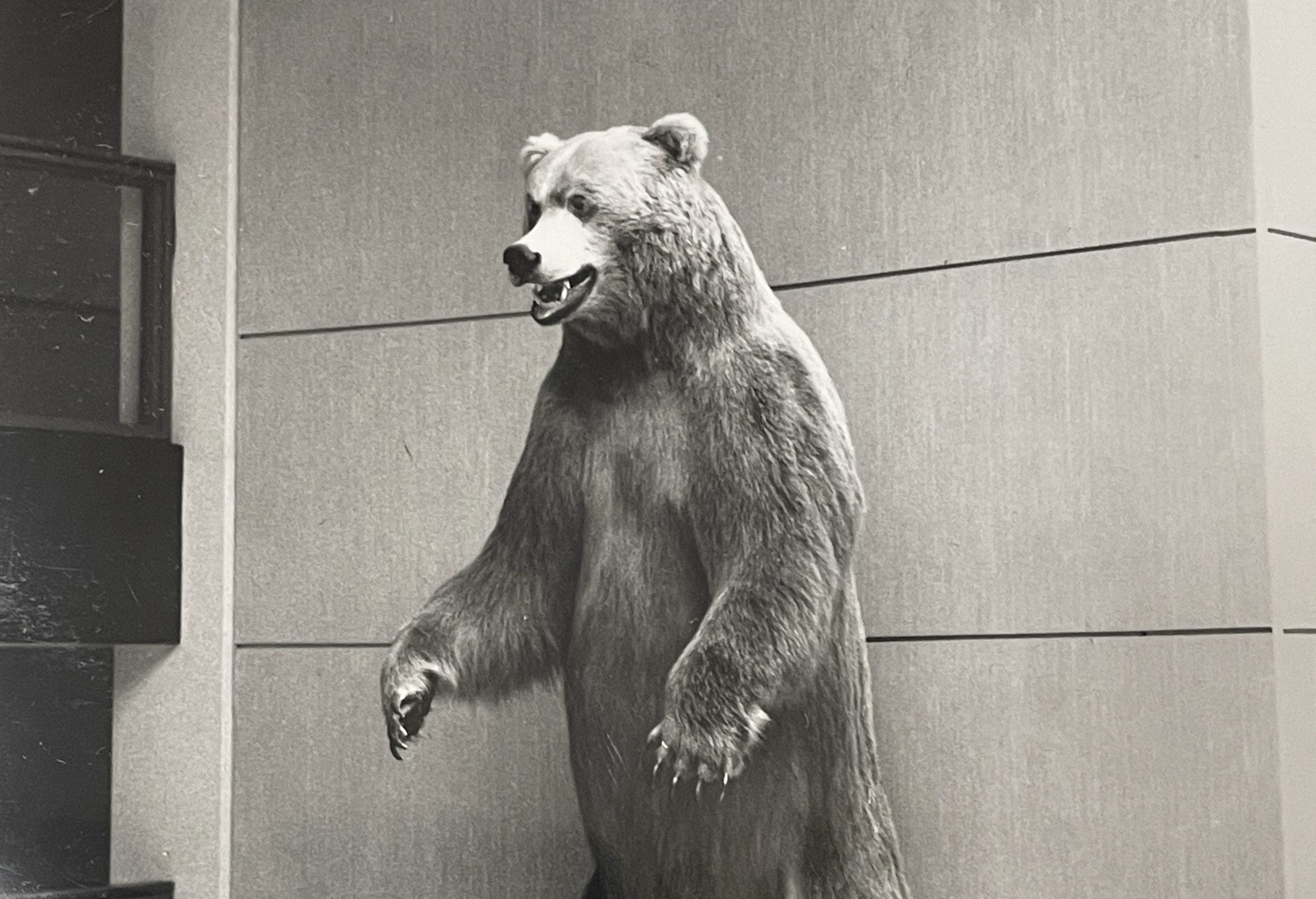
The Alaska brown bear has been on display at the museum since 1979. That’s a long time to be exposed to light, dust, and the love of visitors — three of the biggest preservation risks to collection items. We have to give him some TLC every year during our annual shutdown week to keep him in good shape.
The bear was legally hunted by Minneapolis business owner Edward Sitarz on a trip to Alaska in 1971. Taxidermists at the famous Jonas Brothers of Seattle mounted the bear. (insert not THOSE Jonas Brothers joke here). Sitarz displayed the bear in the lobby of his foundry business until his family first loaned the bear to the museum in 1979. They officially donated him in 1993.

Here at the museum, the bear has had many hibernation holes. He began his museum life on display in the lobby of the museum’s previous building. In the early 1990s, he moved to the atrium, next to the Triceratops and under a lot of skylights. The bear then spent time on the fourth floor before arriving at his current home on the third floor, near the auditorium.
Just like ultraviolet rays can damage human skin, they can also damage bear fur. The bear’s time under the skylights caused a great deal of fading. In the attached images, you can see how brown he was before he moved to the atrium versus how tan he is today. We can’t reverse that fading, so we keep him away from direct sunlight now.


In his current spot, he gets really dusty, and, since he’s a little off the beaten path, people sneak pets. His regular upkeep includes vacuuming with soft cloth over the end of the attachment so we don’t accidentally vacuum up any fur. In the photos, you can see how much dust we get from a couple passes over his head. We use a wide-toothed comb to realign his fur and remove any evidence of visitors’ affection. Luckily, this bear was mounted after the years when arsenic use was common in taxidermy, but you should still wash your hands before eating. Better yet: don’t poke the bear!

Specimen is Z93:6:1