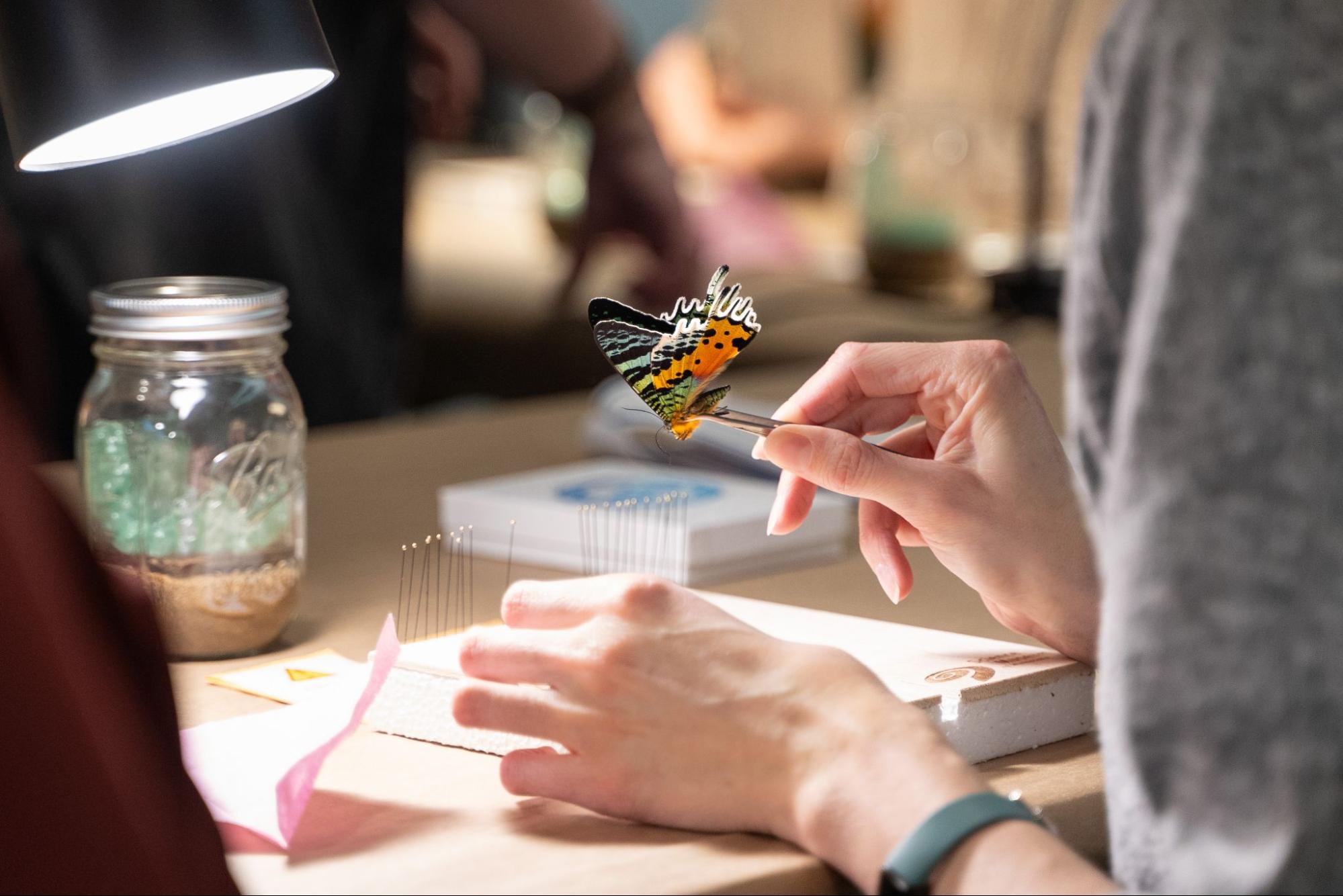
At the Science Museum of Minnesota, Kate Johnson balances spreadsheets and specimens. As Manager of Retail Sales and Strategy, she’s just as comfortable pinning a sunset moth as she is leading the shop.

I’ll never forget the first time I pinned a moth — an underwing moth, to be exact. It was during a staff enrichment event, led by our longtime entomologist, Ron Huber. Watching him handle specimens with care and precision, I felt a spark of curiosity and wonder. His calm, deliberate approach made me realize that pinning isn’t just about placing an insect on a board — it’s about observing, learning, and connecting with the natural world in a way that’s both artistic and scientific. That curiosity turned into a project that Visitor Experience Assistant Manager Andy Kosier and I poured nearly a year into: the Entomology STEM Pinning Kit.

Ron Huber has been a volunteer entomologist at the museum for more than sixty years.
Developing this kit wasn’t as simple as gathering insects and pins. Andy and I met with Ron almost weekly, practicing the techniques, asking questions, and learning the nuances that make museum-level pinning both a creative and scientific endeavor. Each session was an opportunity to witness his deep knowledge and decades of experience, and to try our hands at the delicate work ourselves. One of our biggest challenges was translating technical museum methods into instructions that anyone using the kit could follow. We wanted the kit to be approachable for beginners while still teaching techniques that reflect the museum’s professional standards. That’s why the kit comes with a step-by-step photo manual, a supplementary resource guide, lepidopteran specimens, and all the tools needed to safely and ethically pin your specimens.

A Sarpedon Swallowtail, a great specimen to work with for beginning pinning and is included in the kit as the first lepidopteran to pin.
Creating the manual was a labor of love. From carefully inserting pins in just the right spot to positioning the wings, every detail matters. It’s okay if your first attempt doesn’t look perfect! Learning to pin takes patience, and part of the fun is practicing and improving with each specimen. The kit encourages a skill-building mindset: it’s not about instant perfection. It’s about curiosity, observation, and learning through hands-on experience.

A Sunset Moth is the second specimen included in the kit. It’s a bit more challenging to pin due to its anatomical structure.
Safety and ethics were central to every decision. All insects are sourced from carefully vetted vendors who prioritize sustainability, responsible husbandry, and conservation. We also include information from organizations like the International Union for Conservation of Nature and the U.S. Fish and Wildlife Service to help users understand conservation priorities and responsible collecting practices.
What’s remarkable about this kit is that it’s completely mission-driven. Every part of the Explore Store is designed to support the museum’s mission to share curiosity, hands-on discovery, and a connection to the natural world. Because the kit is designed and produced in-house, it’s a truly unique experience — something you can’t find anywhere else, with resources and instruction that reflect decades of museum expertise.

An Ultimate 3-Piece and Deluxe 5-Piece Gift Set is also available in the Explore Store for those who are looking to start pinning with all the tools and materials.