Theme your Visit is your guide to discovering hidden gems in the museum — all themed on a certain subject. Whether you’re a seasoned museum visitor looking for new ways to explore or a first-timer with a penchant for in-depth knowledge, a themed visit provides the framework for you to experience the museum in a whole new way.
For this installment, we tucked into the museum’s permanent We Move and We Stay exhibit to further understand the traditions, storytelling, and deep cultural meaning the exhibition explores.

Star Quilt Pattern Interactive
For the many Indigenous people in the Great Plains region, star quilts are given to mark important life events, like graduations, marriages, and births. The design is created by piecing together small diamonds to create eight sections. When the sections are joined, they create an eight-point star. Stars are seen as a symbol of honor and respect. The Morning Star announces a new day and represents fresh beginnings and a reminder to give thanks.

Jingle Dresses
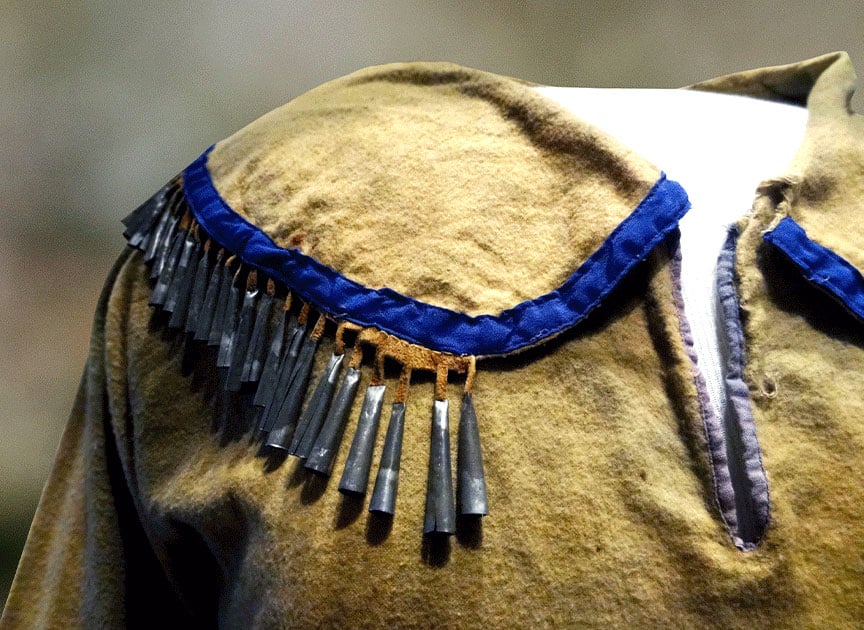
Jingle dresses started to appear in Ojibwe communities in the early 1900s, with origins attributed to three different communities — one being the Mille Lacs Band of Ojibwe in north-central Minnesota. The dresses are lined with rows of metal cones, or ziibaaska’iganan that create a distinct sound as the wearer moves. The fashions and styles of jingle dresses have changed with time, but the meaning, dance, and tradition have stayed the same over the past century.

Bison Tobacco Pouch
Nestled on the hoof of a bison, a little red pouch containing tobacco is offered to the animal’s spirit in thanks. A sacred plant to nearly all Native American communities, tobacco smoke carries prayers to the spirit world, and an offering of its dried leaves connects prayers to the receiver. The pouches, or ties, consist of a square piece of cloth — in a variety of colors and patterns, although red is common — and a palmful of tobacco.

Wild Ricing Materials
Once covering large swaths of wetlands across Minnesota and the Great Lakes region, manoomin (wild rice) has been consumed for at least 2,000 years. Minnesota contains more acres of natural wild rice than any other state, and it is often harvested from the state’s lakes using traditional methods. To harvest manoomin traditionally, it must be knocked, dried, parched, hulled, and winnowed, often using hand-built tools.

Birch Bark Canoe
Light and easy to maneuver, birch bark canoes have served as important means of water transportation for Ojibwe communities for centuries. The smooth, resilient, and waterproof material was ideal for carrying across land and treading through water, as well as easily repairable — birch bark was widely available in Minnesota forests. The canoes can be used to catch manoomin grains as they are knocked from the plant.
To learn more about the features mentioned above, visit We Move and We Stay on Level 4.