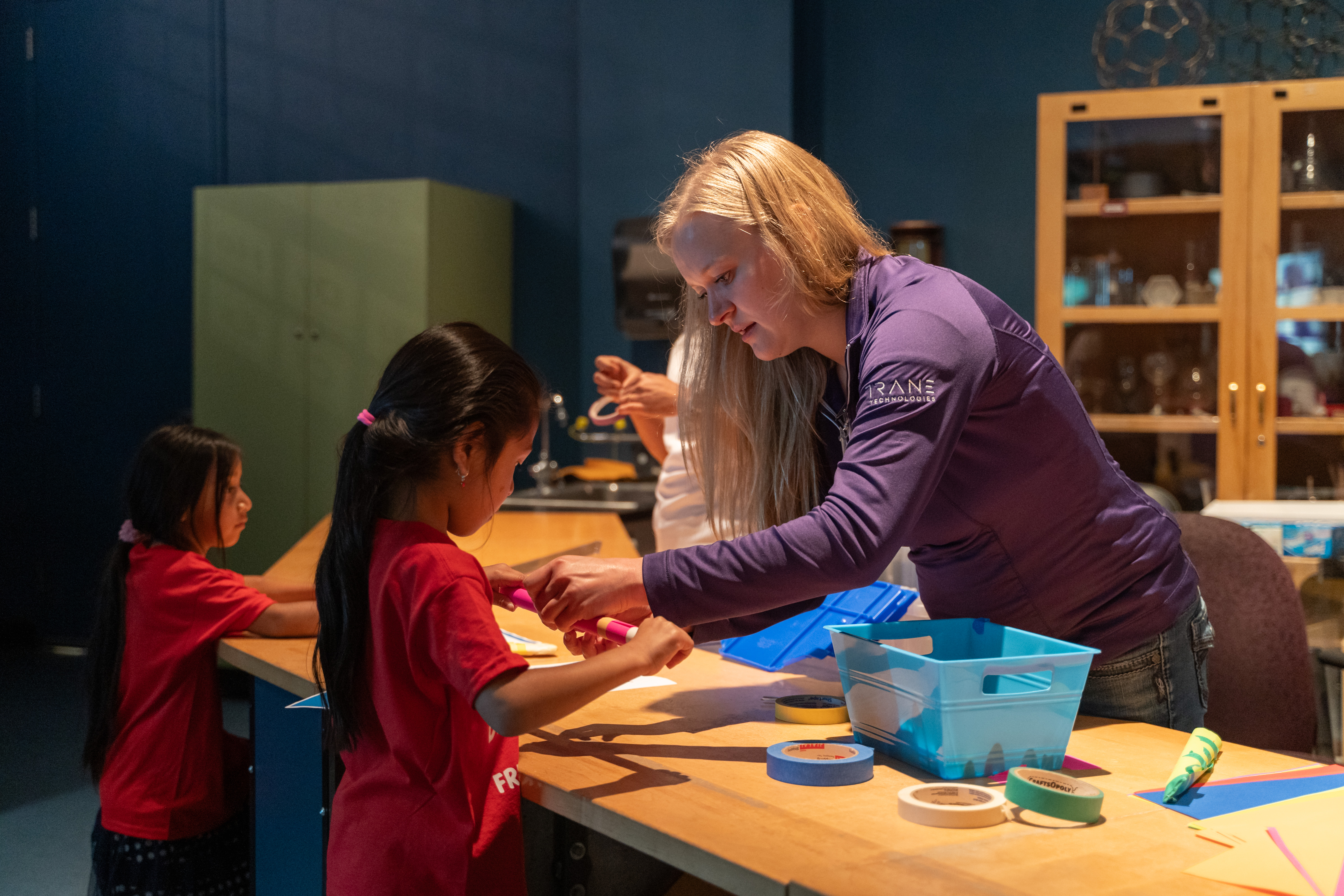
The Science Museum of Minnesota and Trane Technologies received the Outstanding Collaboration Award at the 2025 Twin Cities Business Community Impact Awards for their work on youth workforce development in STEM fields.
The collaboration centers on the museum’s Kitty Andersen Youth Science Center (KAYSC), a workforce development program for young people interested in STEM careers.

Trane Technologies employees serve on the Center’s Workforce Innovation Committee, developing curriculum focused on data analytics and decarbonization — areas where people can find living-wage jobs without a four-year degree. Employees also host regular career talks and bring KAYSC participants into their offices each summer for field experiences. KAYSC participants gain industry-recognized certifications and direct connections to professionals in high-demand fields, creating concrete paths to career opportunities.
“Together, we’re not just preparing young people for careers — we’re actively dismantling barriers to opportunity in STEM fields,” said Thulani Jwacu, Director of KAYSC.
The partnership works in both directions. Trane Technologies uses the museum’s STEM Justice curriculum to train their workforce on recruiting and supporting employees from communities historically underrepresented in STEM. The training has now expanded to Trane’s Volunteer Ambassadors nationwide.
“Building on our more than 80-year presence in the Twin Cities, we’re proud to invest in the next generation of innovators and problem-solvers,” Amy Volz, Director of Strategic Partnerships & Corporate Impact, Trane Technologies said.
Twin Cities Business presents the Outstanding Collaboration Award to partnerships between nonprofits and businesses that create measurable community impact. Other awards presented at the ceremony included recognition for Economic Empowerment, Innovations in Philanthropy, and Innovative Awareness Campaign.
The partnership demonstrates how businesses and nonprofits can work together on workforce development — addressing both immediate hiring needs and longer-term equity issues in STEM education and careers. The KAYSC’s collaborative nature and STEM-based curriculum give us a framework for one-of-a-kind relationships like this that make a real difference.